 EN
EN
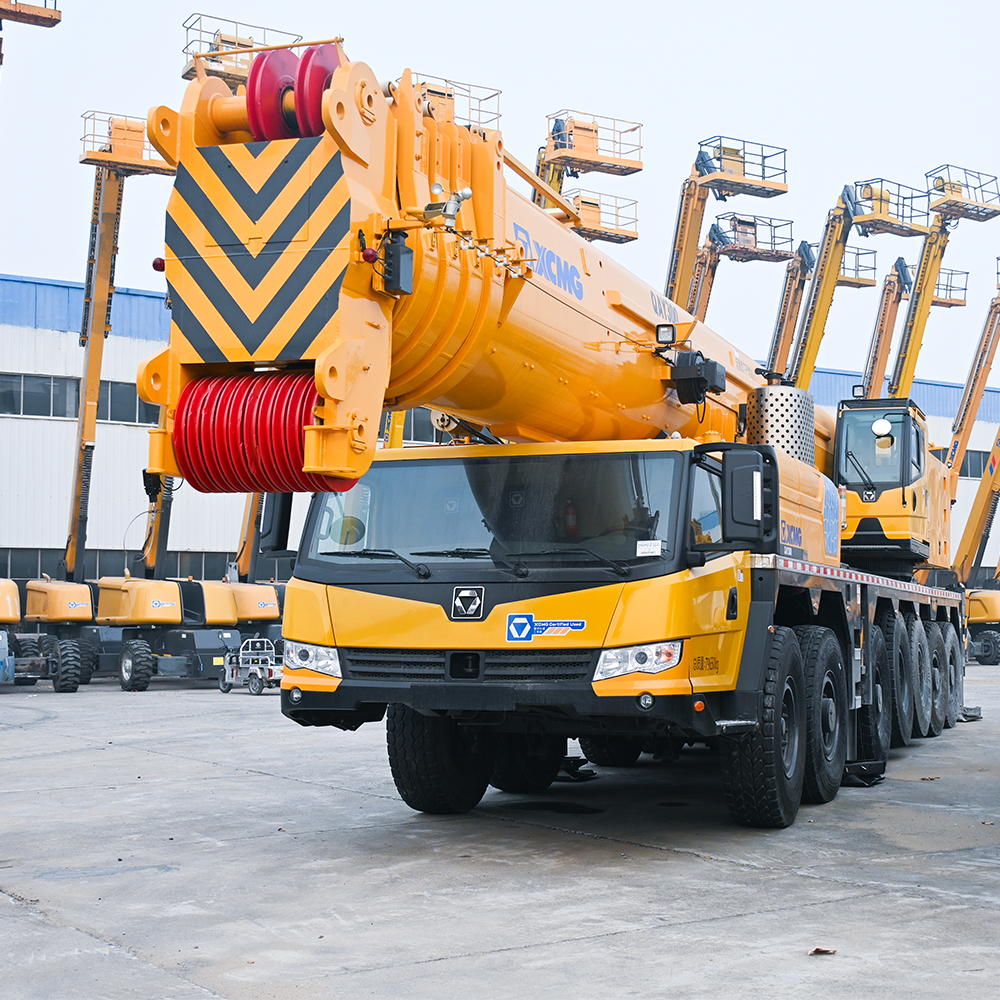
Understanding True ROI Drivers for a Used Crane Truck for Sale
Beyond Purchase Price: Key Inputs in ROI Modeling (Age, Hours, Service History)
Calculating the true return on investment (ROI) for a used crane truck for sale requires analyzing more than just the upfront price. Three critical factors directly impact long-term profitability:
- Equipment Age: Units under 8 years old typically strike the optimal balance between modern capability and manageable depreciation—avoiding both obsolescence and excessive wear.
- Operating Hours: Engine and crane systems are usage-sensitive; units below 12,000 service hours consistently demonstrate lower failure rates and stronger residual value.
- Documented Service History: Verified maintenance records—including hydraulic system servicing and structural inspections—reduce unexpected downtime by up to 47%, according to industry benchmarks from Equipment Finance Analytics.
Ignoring any of these variables skews ROI projections by an average of 32%. Thorough verification—not assumptions—is essential for credible forecasting.
Depreciation Curve Advantage and Realistic Payback Period Benchmarks
The most significant financial advantage of purchasing used equipment lies in bypassing the steepest 40% depreciation that occurs during a new crane truck’s first three years. This delivers two measurable benefits:
- Shorter Payback Periods: Well-maintained used models typically achieve ROI within 18–24 months—versus 36–48 months for new units—accelerating capital recovery.
- Lower Capital Risk: With 60–70% of total depreciation already absorbed, resale value is less vulnerable to market volatility.
When acquisition costs stay below 55% of equivalent new pricing and annual maintenance budgets are capped at 15%, used crane trucks outperform new units on 5-year net present value (NPV) in 83% of cases, per construction fleet analyses published by the Associated General Contractors (AGC). Disciplined inspection and realistic budgeting aren’t optional—they’re foundational to ROI integrity.
Total Cost of Ownership vs. Operational Value
Maintenance, Repair, and Parts Availability Risks by Model Year and Brand
Maintenance and repair costs are central to total cost of ownership (TCO)—and they vary significantly across model years and brands. Equipment over 10 years old shows a 40% increase in hydraulic system repairs compared to units under 8 years, according to Equipment World (2023). Parts availability compounds this risk: discontinued models from niche manufacturers face average delays of three weeks for critical components. Key considerations include:
- Model Year: Post-2010 trucks generally retain compatible electronics and diagnostic interfaces; pre-2005 units often require custom solutions due to component obsolescence.
- Brand Ecosystem: Manufacturers with larger U.S. market shares—such as Terex, Manitex, and Grove—maintain deeper parts inventories and broader dealer support networks.
- Service History Gaps: Unverified or incomplete records correlate with 28% higher annual repair costs, per AGC fleet performance data.
These factors don’t just affect budgets—they shape uptime, safety compliance, and project scheduling reliability.
Quantifying Savings: Used Crane Truck for Sale vs. New — When the Gap Justifies the Risk
The financial case for used equipment hinges on disciplined TCO comparison—not headline pricing. While new crane trucks depreciate 30–40% in their first three years, used units stabilize faster and avoid that initial cliff. Here's a representative 5-year ownership breakdown:
| Cost Component | New Crane Truck | Used Crane Truck | Difference |
|---|---|---|---|
| Purchase Price | $250,000 | $120,000 | -$130,000 |
| Annual Maintenance | $8,000 | $15,000 | +$35,000 |
| Residual Value | $150,000 | $90,000 | -$60,000 |
| Total Cost of Ownership | $140,000 | $105,000 | -$35,000 |
This $35,000 TCO advantage justifies the risk when:
- The unit serves predictable, moderate-duty applications—not continuous heavy-lift or extreme environments
- Critical components (boom structure, hydraulic pumps, slewing ring) carry recent third-party inspection reports
- Your operation maintains a dedicated repair reserve of at least 15% of the purchase price
Without those safeguards, savings erode quickly—turning apparent value into hidden liability.
Strategic Alignment: Matching a Used Crane Truck for Sale to Your Workload
Job-Scope Framework: Avoiding Over- or Under-Specification
Selecting a used crane truck for sale demands precise alignment between equipment capability and operational reality. Overspecification—choosing a crane far exceeding your typical lift requirements—drives up fuel use, maintenance costs, and site logistics complexity. Underspecification—relying on a unit routinely operating near capacity—elevates safety risks, accelerates wear, and increases unplanned downtime.
A job-scope framework prevents both errors by evaluating:
- Average and peak lift weights and radii
- Required boom height and outreach for common jobs
- Site access constraints (road width, overhead clearance, turning radius)
- Duty cycle intensity (e.g., lifts per shift, duration of continuous operation)
This approach transforms procurement from guesswork into strategic asset deployment—directly protecting ROI through optimized utilization, reduced risk exposure, and sustained productivity.
FAQ
What is the ideal age for a used crane truck?
Units under 8 years old strike the best balance between modern features and manageable depreciation.
How many operating hours should I consider when purchasing a crane truck?
Trucks with fewer than 12,000 hours generally have lower failure rates and higher residual value.
Why is service history important?
Verified maintenance records reduce unexpected downtime by up to 47%, enhancing reliability and ROI.
How does depreciation curve influence financial decisions?
Used units bypass the steepest depreciation period, achieving ROI sooner and reducing capital risk.
What factors should I evaluate for job-scope alignment?
Lift weights, radii, boom height, site constraints, and duty cycle intensity are key to selecting the right equipment.
How does brand ecosystem impact operational costs?
Larger manufacturers provide better parts availability and dealer support, reducing maintenance delays.