 EN
EN
Cost Savings and Total Cost of Ownership Advantages
Upfront Acquisition Cost Reduction vs. New Equipment
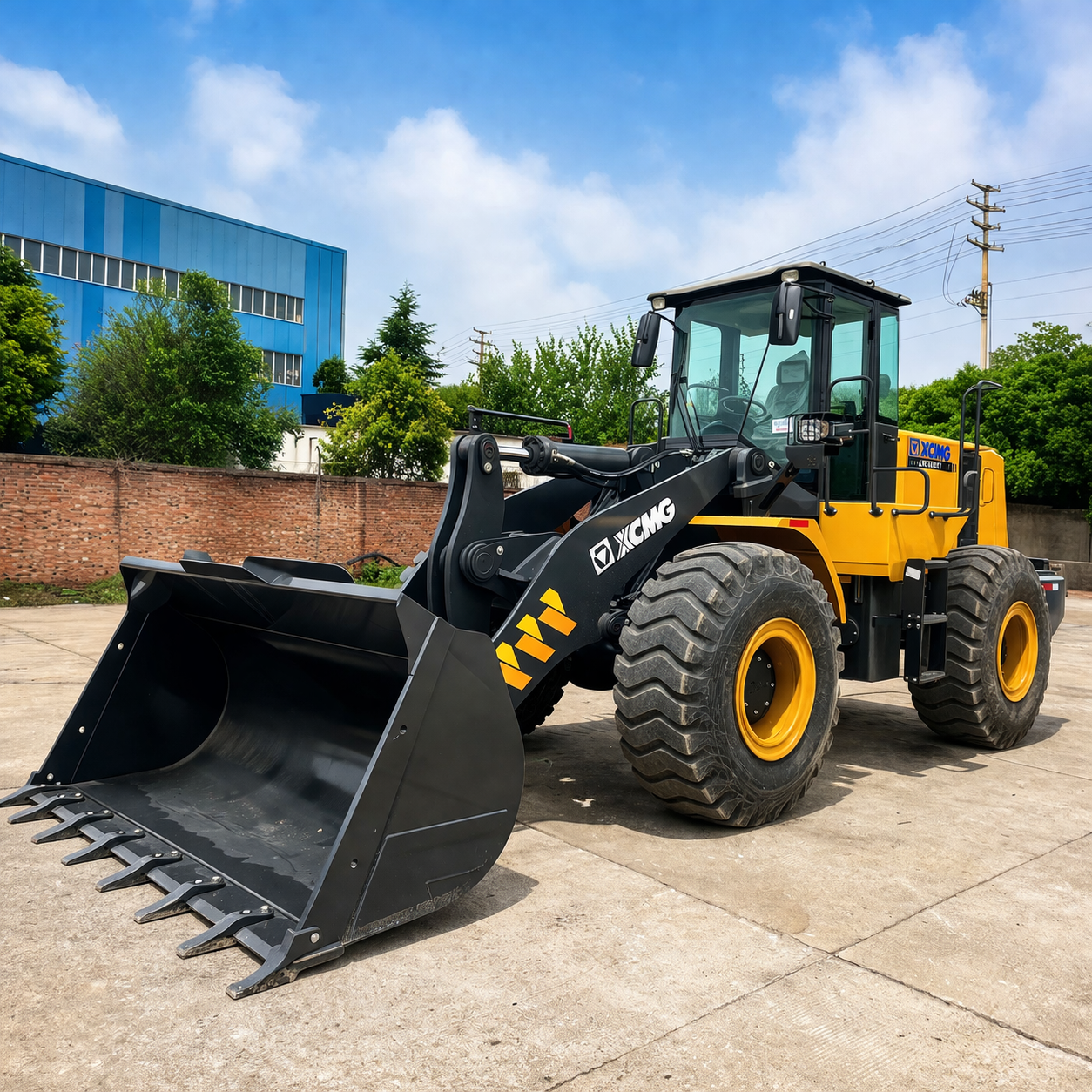
Purchasing used wheel loaders delivers immediate and substantial capital expenditure savings—typically 30–50% lower than comparable new machines, per EquipmentWatch’s 2023 market data. This upfront cost reduction preserves working capital that can be redirected toward project mobilization, operator training, or complementary equipment without adding debt service pressure. For construction firms managing seasonal demand fluctuations, quarry operators expanding into short-term contracts, and government contractors with budget-cycle constraints, pre-owned equipment enables scalable fleet expansion without the financing strain and rigid repayment schedules that accompany new-machinery purchases. Importantly, when sourced through a certified refurbishment program—such as the factory-based process operated by Shandong Simba Truck Machinery—the functional capability and reliability of a well-maintained used wheel loader closely approximate new equipment performance, turning a cost-driven decision into a strategic procurement advantage.
5-Year TCO Comparison: Fuel, Maintenance, Repairs, and Downtime
Total Cost of Ownership (TCO) analysis confirms that, over a typical five-year ownership cycle, certified pre-owned wheel loaders often deliver superior financial performance—even accounting for higher maintenance exposure. Key cost components break down as follows:
|
Cost Component |
New Wheel Loader |
Used Wheel Loader (Certified) |
Savings |
|
Depreciation (Annual) |
$28,000 |
$12,000 |
57% |
|
Preventive Maintenance |
$9,200 |
$8,500 |
8% |
|
Major Repairs |
$5,800 |
$6,900 |
–19%* |
|
Fuel Consumption |
$41,000 |
$41,000 |
0% |
|
5-Year TCO |
$420,000 |
$342,000 |
18.6% |
The net 18.6% TCO advantage stems primarily from drastically reduced depreciation—the single largest cost driver in equipment ownership—and lower initial capital outlay. Both factors compound over time, freeing up capital for other business investments. Buyers who source from an authorized partner with rigorous multi-point inspection and refurbishment protocols, such as Shandong Simba’s 8,000 sqm facility, further de-risk ownership by turning reliability concerns into manageable, predictable expenses. A certified used loader that has undergone compression testing, hydraulic system verification, and full service documentation review enters operation with a known condition profile, eliminating the uncertainty that can inflate first-year costs.
Essential Due Diligence Before Buying Used Wheel Loaders for Sale
Pre-Purchase Inspection Checklist: Hydraulics, Axles, Tires, Engine Compression
A rigorous, component-level inspection is essential—not optional—for avoiding post-purchase cost surprises. Prioritize these four systems, each with distinct failure modes and financial implications:
|
Component |
Key Inspection Items |
Critical Business Impact |
|
Hydraulics |
Check hoses, pumps, and cylinders for leaks; test all functions |
Prevents unexpected repairs averaging $5,200 (construction equipment data, 2024) |
|
Axles |
Inspect for play, leaks, and unusual noise under load |
Avoids unplanned downtime that halts full job site operations |
|
Tires |
Measure tread depth, check for cuts or sidewall damage |
A full set of replacements costs over $2,100 (2024 industry data), adding unexpected costs |
|
Engine Compression |
Test compression across all cylinders to confirm internal wear |
Verifies long-term engine reliability before purchase commitment |
Skipping even one of these inspection items risks transforming a value-driven acquisition into a first-year financial liability. Partnering with a supplier that performs and documents these checks—and provides the resulting inspection report before invoicing—eliminates guesswork and supports informed negotiation.
Interpreting Fluid Analysis and Service Records to Uncover Hidden Wear
Visual inspections, no matter how thorough, cannot reveal internal component degradation. Fluid analysis bridges this gap by identifying elevated levels of wear metals, soot, fuel dilution, and coolant ingress in engine oil, hydraulic fluid, and coolant samples. For instance, rising iron or chromium counts signal cylinder liner or ring wear, while silicon ingestion points to air filtration issues—findings that materially impact remaining service life estimates. Equally critical is the completeness and consistency of service records: documented oil changes, filter replacements, and scheduled maintenance intervals strongly correlate with long-term reliability and residual value. When procuring through Shandong Simens, international buyers receive a comprehensive documentation package that includes service history, fluid analysis results, and a detailed multi-point condition report—enabling procurement teams to validate machine condition and usage history with confidence.
Risk Mitigation: Warranty Support, Parts Availability, and Resale Strategy
Mitigating the risks of purchasing used wheel loaders rests on three interdependent pillars. First, warranty coverage: extended warranties covering engines, transmissions, and hydraulics—typically offered for 1–3 years based on age and operating hours—provide financial protection against major component failures and signal the seller’s confidence in the machine. Second, parts availability: confirm compatibility and supply chain support for Tier 3/4 engine families before purchase; as an authorized partner of XCMG and Shantui, Shandong Simens ensures access to genuine OEM parts and reliable aftermarket alternatives. Third, resale readiness: maintain meticulous service records from day one of ownership. Late-model units with full, verifiable documentation consistently command 12–18% higher resale premiums, according to industry benchmark data. Together, these strategies transform used equipment acquisition from a short-term cost-cutting tactic into a disciplined, lifecycle-optimized investment—one that supports predictable fleet costs, maximizes uptime, and preserves asset value over the full ownership horizon.
Ready to Turn Used Equipment Procurement into a Predictable, High-ROI Strategy?
A certified pre-owned wheel loader can deliver the same site-level productivity as a new machine—at 30–50% lower acquisition cost and with an 18.6% TCO advantage over five years. The key is sourcing that equipment through a partner with factory-based refurbishment capability, rigorous multi-point inspection, and global export expertise.
Shandong Simba Truck Machinery offers exactly that. As an authorized partner of XCMG and Shantui, with an 8,000 sqm dedicated facility and over 80 technical staff, we supply fully inspected, expertly reconditioned wheel loaders—complete with service records, fluid analysis, and detailed condition reports. Our end-to-end service covers equipment consulting, custom configuration, pre-shipment testing, logistics, and responsive after-sales parts support, giving fleet managers, contractors, and distributors a single, accountable source for certified used heavy equipment.
Contact us today for a no-obligation consultation, a machine-specific inspection report, and a competitive quotation. Let us help you build a lower-cost, higher-uptime fleet with documented financial and operational confidence.
Frequently Asked Questions (FAQ)
Q: What are the main cost savings when purchasing a used wheel loader?
A: Purchasing a used wheel loader delivers upfront cost reductions of 30–50% compared to new equipment, along with lower depreciation costs, resulting in significant TCO advantages over five years.
Q: What should be included in a pre-purchase inspection checklist?
A: Essential components for inspection include hydraulics, axles, tires, and engine compression to avoid unexpected repairs, downtime, or additional operational costs.
Q: How can fluid analysis and service records help with due diligence?
A: Fluid analysis identifies internal component wear, overheating, or contamination, while service records provide a history of maintenance that can indicate future reliability.
Q: How do extended warranties mitigate risks?
A: Extended warranties protect against major failures in engines, transmissions, and hydraulics, offering financial support for repairs during a 1–3-year coverage period.