 EN
EN
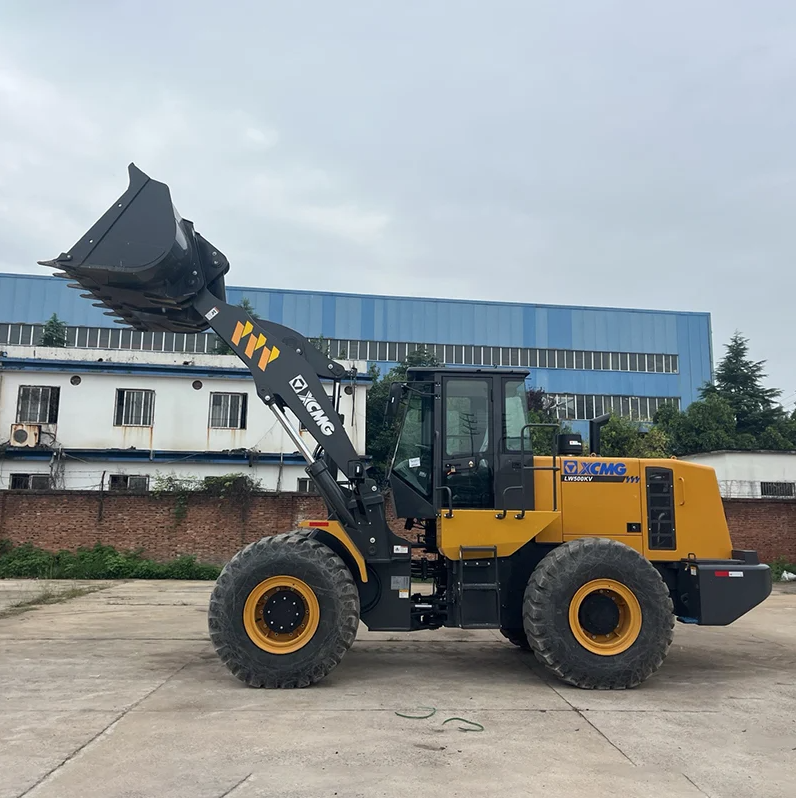
Core Specifications: How Horsepower, Payload, and Weight Directly Impact Wheel Loader Prices
The three core specifications—horsepower, payload capacity, and operating weight—are the primary drivers of wheel loader pricing. Each scales directly with manufacturing complexity and material costs, and buyers must assess them holistically to avoid over-specifying (incurring unnecessary expense) or under-sizing (compromising safety and productivity).
Horsepower Tiers (<40 HP, 40–80 HP, >80 HP) and Their Price Correlations
Horsepower dictates cycle speed, load acceleration, and sustained performance under demand. Pricing reflects sharp thresholds at key power benchmarks. Compact loaders under 40 HP—ideal for landscaping, small demolition, or confined urban sites—typically start below $80,000. The 40–80 HP range covers most agricultural, municipal, and light construction applications and sells for $80,000–$150,000. Above 80 HP, costs rise steeply: medium-duty models (80–200 HP) range from $150,000 to $350,000, while heavy-duty units exceeding 440 HP—used in large-scale mining or quarrying—can surpass $1,500,000. This escalation stems from heavier-duty engines, reinforced transmissions, larger cooling systems, and upgraded hydraulics. Fuel consumption also scales nonlinearly: a 250 HP loader may consume nearly 7 gallons per hour under full load, compared to under 2 gallons for a 100 HP unit. While higher horsepower improves throughput, it only delivers ROI when matched to material density, haul distance, and daily volume—not raw spec sheets.
Payload Capacity and Operating Weight as Primary Cost Determinants
Payload capacity—the maximum safe lift weight—and operating weight (machine mass plus fluids)—are intrinsically linked and jointly account for roughly 40–50% of total machine cost, second only to horsepower in price influence. A loader rated for a 5-ton payload generally requires an operating weight of 15–20 tons to maintain stability and structural integrity, demanding larger axles, reinforced frames, and premium tires. As a result, small wheel loaders (5–10 tons operating weight) sell for $100,000–$250,000; mid-size units (10–20 tons) for $250,000–$500,000; and large machines (20+ tons) for $500,000–$1,500,000. Though heavier machines benefit from economies of scale in structural steel, they require proportionally more expensive hydraulics, braking systems, and cooling infrastructure. Over-specifying payload—even by 10%—can add $30,000–$50,000 without operational gain, while under-specifying risks tipping hazards, premature component wear, and reduced bucket fill efficiency. Matching payload to the heaviest material routinely handled (e.g., wet clay vs. dry gravel) is essential for both safety and value.
Technology Upgrades: How GPS, Telematics, and Automation Influence Wheel Loader Prices
Telematics and Predictive Maintenance: 7–15% Premium for Data-Driven Operations
Telematics integration—including real-time engine diagnostics, GPS location tracking, fuel monitoring, and remote software updates—adds a 7–15% premium to the base price. This investment enables predictive maintenance scheduling, reducing unplanned downtime by up to 30% in fleet operations, according to data from the Association of Equipment Manufacturers (AEM). GPS functionality also supports asset utilization analytics and theft recovery—critical for contractors managing dispersed equipment across multiple job sites. While the upfront cost increases wheel loader prices, operators frequently recoup the premium within 12 months through lower repair expenses, optimized fuel use, and improved machine availability.
Automation Features and Enhanced Safety Systems: Balancing ROI and Wheel Loader Prices
Semi-automated functions—such as grade control assist, auto-dig, and load-sensing bucket leveling—reduce operator fatigue and improve material consistency, cutting loading variance by up to 25% in controlled trials. Paired with enhanced safety systems—including 360-degree camera suites, proximity detection, and automatic emergency braking—these features raise wheel loader prices by 10–18%. For high-utilization operations facing skilled labor shortages or working in hazardous environments (e.g., landfill tipping faces or busy intermodal yards), the productivity gains and reduced insurance claims often justify the investment. In contrast, low-hour or seasonal users may find basic OEM safety packages sufficient, avoiding the highest-tier automation premiums without compromising core functionality.
Brand Strategy and Support Ecosystem: Why Manufacturer Choice Changes Wheel Loader Prices
The brand behind a wheel loader shapes far more than its initial sticker price—it defines warranty coverage, long-term service accessibility, and residual value. These elements collectively determine true cost of ownership, making brand selection a strategic decision, not just a procurement one.
Tier-1 Brand Premium (10–22%) vs. Value-Line Alternatives: Warranty, Resale, and Service Network Effects
Tier-1 manufacturers—including Caterpillar, Volvo CE, Komatsu, and John Deere—command a consistent 10–22% price premium over value-line alternatives. This reflects comprehensive standard warranties (often 2–3 years/unlimited hours), broad dealer networks with certified technicians, and globally available parts inventories. According to the Equipment Dealers Association (EDA), Tier-1 machines retain 15–25% more of their original value at 36 months than comparable value-line models—directly lowering lifecycle cost. Extended warranty options further mitigate risk of major component failure, particularly for high-hour applications. Value-line brands appeal to budget-conscious buyers prioritizing low initial wheel loader prices and accepting trade-offs: shorter standard warranties (often 12 months), limited regional service support, and weaker resale demand in markets where brand trust influences buyer confidence. The optimal choice hinges on operational priorities—uptime assurance and predictable maintenance versus immediate capital conservation.
Attachments and Customization: Hidden Cost Drivers in Wheel Loader Prices
Bucket Types, Cold-Climate Kits, and Protection Plans Adding Up to 9% to Final Cost
Attachments and factory-installed customizations are frequent yet often underestimated contributors to final wheel loader prices—collectively adding up to 9% beyond the base model. Heavy-duty buckets with hardened teeth and reinforced edges cost significantly more than standard general-purpose variants, especially when engineered for abrasive materials like crushed rock or slag. Cold-climate kits—including cab heaters, engine block warmers, hydraulic fluid conditioners, and battery insulation—add meaningful cost but are essential for reliable operation in sub-zero environments. Likewise, extended protection plans covering major drivetrain and hydraulic components increase upfront investment but reduce exposure to high-cost failures after standard warranty expiration. While these options elevate the purchase price, they often improve total cost of ownership by extending service intervals, enhancing operator retention, and increasing machine versatility across changing job requirements. Buyers should prioritize attachments aligned with their dominant material type, climate zone, and maintenance strategy—not speculative “future-proofing.”
FAQ
What influences wheel loader pricing the most?
The primary factors driving wheel loader prices include horsepower, payload capacity, operating weight, and technology upgrades such as GPS or telematics. Brand reputation and additional customizations also heavily affect the final cost.
Which horsepower tier is best for my needs?
Compact loaders (<40 HP) suit landscaping and urban tasks, mid-range loaders (40–80 HP) work well for agriculture or light construction, while heavy-duty models (>80 HP) excel in mining or large-scale projects. Match horsepower to your material density and daily workload for optimal ROI.
Do telematics upgrades deliver value?
Telematics enhance operational efficiency through real-time diagnostics and predictive maintenance, reducing downtime by up to 30%. Though they add 7–15% to the initial price, savings from optimized fuel usage and fewer repairs often outweigh the initial expense.
Are Tier-1 brand loaders worth the premium?
Yes, if uptime assurance, warranty coverage, and resale value are priorities for your operation. Tier-1 brands retain more value long-term and provide robust service networks, justifying their higher upfront cost.
Should I invest in attachments and customizations?
Yes, but carefully select attachments and customizations based on dominant material types, climate, and operational needs. Over-customization can unnecessarily increase costs, while missing essential features may limit functionality or safety.
Table of Contents
- Core Specifications: How Horsepower, Payload, and Weight Directly Impact Wheel Loader Prices
- Technology Upgrades: How GPS, Telematics, and Automation Influence Wheel Loader Prices
- Brand Strategy and Support Ecosystem: Why Manufacturer Choice Changes Wheel Loader Prices
- Attachments and Customization: Hidden Cost Drivers in Wheel Loader Prices
- FAQ