
 EN
EN
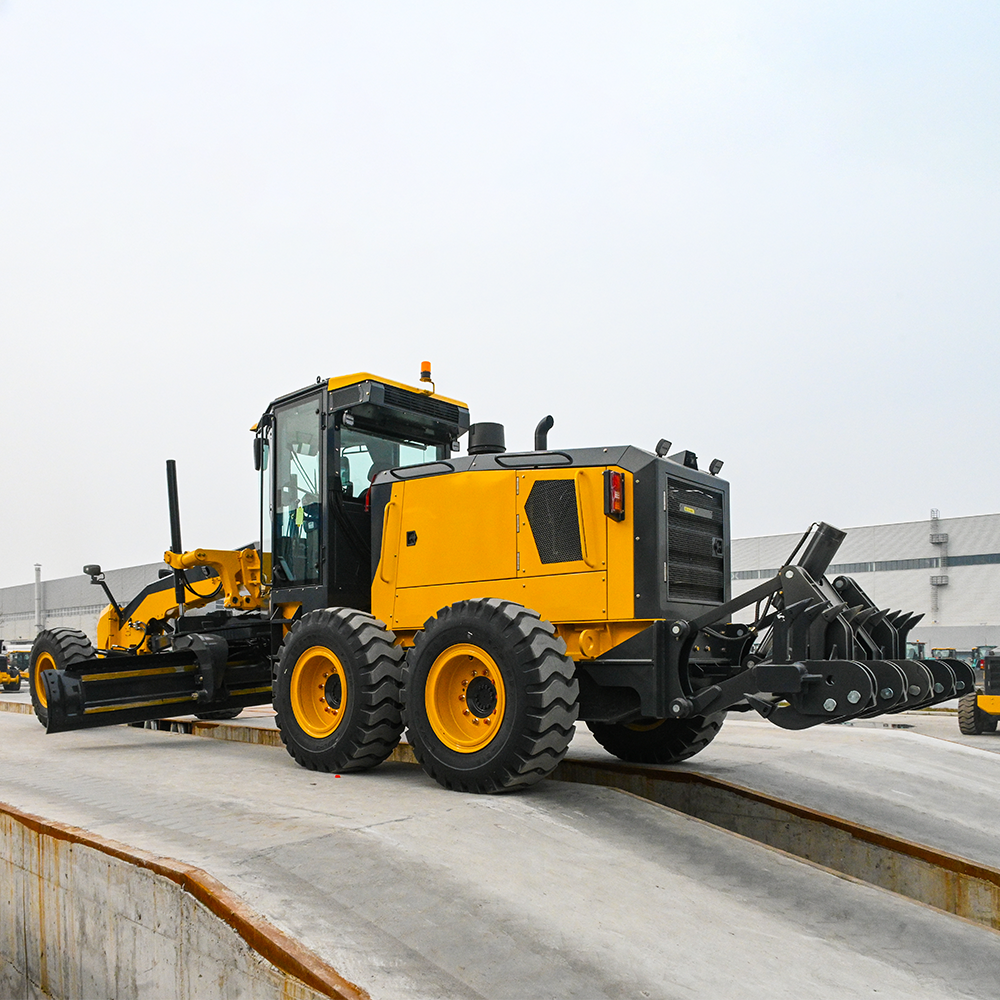
Upfront Cost Advantages of Second Hand Graders for Sale
Capital Expenditure Reduction vs. New Grader Acquisition
Purchasing second hand graders for sale delivers immediate capital expenditure savings compared to new acquisitions. New graders typically cost between $100,000 and $500,000+, depending on size, configuration, and manufacturer. In contrast, well-maintained used models from leading brands—such as Caterpillar, Komatsu, and Volvo—often sell for 40–60% less. This upfront reduction frees capital for auxiliary equipment, fleet expansion, or other strategic operational investments without limiting project scope.
Tax Depreciation Benefits and Flexible Financing Options
Used graders qualify for accelerated depreciation under IRS Section 179 and bonus depreciation rules, enabling faster tax deductions than with new equipment. These provisions improve near-term cash flow and enhance ROI. Flexible financing options further strengthen affordability:
- Shorter lease terms with lower monthly payments
- Refinancing opportunities for existing equipment debt
- Reduced down payment requirements
Combined with the lower acquisition cost, these financial tools make second hand graders a pragmatic choice for contractors prioritizing budget efficiency while preserving grading capability.
Performance Realities: Efficiency, Reliability, and Productivity Trade-Offs
Measurable Impacts on Blade Accuracy, Grade Consistency, and Cycle Time
Second hand graders can deliver strong performance—but only when properly maintained. Blade accuracy may decline due to worn control linkages or hydraulic valve lag; grade consistency suffers if the moldboard is warped or the circle gear exhibits excessive backlash. Cycle time often increases with age due to reduced engine responsiveness or hydraulic inefficiency. That said, a thoroughly inspected and well-serviced used grader can hold tolerances within ±¼ inch—comparable to many new mid-tier models. Conversely, a neglected unit may require multiple passes, eroding initial savings. Prioritizing inspections of hydraulic cylinders, seals, wear pads, and steering components helps identify—and avoid—these hidden productivity risks.
Comparative Efficiency: CAT, Komatsu, and Volvo Second Hand Graders for Sale
Manufacturer heritage matters in used grader performance. Caterpillar graders are known for rugged drivetrains and consistent hydraulic flow, excelling in rough grading and abrasive conditions. Komatsu models emphasize fuel efficiency and ergonomic design, supporting sustained operator productivity over long shifts. Volvo graders stand out for precision-grade control integration—even in older units—enabling tighter finish grading with less manual correction. While late-model Volvos often lead in blade repeatability, CAT machines frequently outperform in high-torque, low-visibility environments. Brand-specific service costs and parts availability also influence long-term efficiency, making TCO—not just acquisition price—the decisive factor.
Critical Inspection Checklist to Preserve Long-Term Efficiency
Hydraulic System Integrity, Articulation Wear, Circle Alignment, and Moldboard Condition
A disciplined pre-purchase inspection is non-negotiable. Begin with the hydraulic system: verify pressure stability under load, check for external leaks, and test cylinder response for drift or sluggishness—signs of internal seal wear or valve degradation. Next, examine the articulation joint for lateral play or uneven bushing wear, which compromises steering control and frame integrity. Inspect the circle gear and pinion for pitting, tooth wear, and measurable backlash (>0.020” indicates concern); misalignment here directly undermines grade accuracy. Finally, assess the moldboard: look for cracks, warpage, or distortion along the cutting edge and end bits. A compromised moldboard reduces material rolling efficiency and increases operator fatigue. Document every finding—this diligence prevents costly surprises and supports data-driven maintenance planning throughout the machine’s service life.
Total Cost of Ownership: When Second Hand Graders for Sale Deliver True Value
Total Cost of Ownership (TCO) reveals whether second hand graders truly outperform new ones—not just at purchase, but across their lifecycle. TCO includes acquisition price, scheduled and unscheduled maintenance, fuel consumption, insurance, taxes, financing, and projected resale value. Well-maintained graders typically retain 20–40% of their original value after 5–10 years—a meaningful offset against ownership costs. Crucially, downtime is the largest hidden TCO driver: rigorous pre-purchase inspection and proactive maintenance reduce unplanned stoppages more effectively than any warranty on a new machine. When modeled using the standard formula—Purchase Price + Operating Costs – Resale Value—second hand graders often yield lower hourly operating costs than new equivalents, especially for contractors with disciplined maintenance protocols and access to skilled technicians. In this context, “used” isn’t a compromise—it’s a calibrated investment strategy.
Frequently Asked Questions
What are the major cost advantages of buying second hand graders?
Second hand graders offer significant upfront cost savings, often selling for 40–60% less than new models. They also qualify for tax benefits like accelerated depreciation and have lower financing requirements, which make them a budget-friendly alternative.
How can I ensure the performance of a second hand grader?
Focus on thorough pre-purchase inspections, including hydraulic system integrity, articulation wear, circle alignment, and moldboard condition. Regular maintenance is also crucial for preserving reliability and performance.
Which brands are most reliable for second hand graders?
Caterpillar, Komatsu, and Volvo are leading brands. Caterpillar excels in rugged environments, Komatsu offers ergonomic designs and fuel efficiency, and Volvo provides precision-grade control. Choosing a brand depends on specific project needs and service support availability.
What is Total Cost of Ownership (TCO) and why is it important?
TCO includes the purchase price, operating costs, maintenance, fuel, taxes, and resale value, providing a complete picture of lifecycle costs. Well-maintained used graders often deliver lower TCO than new models.