
 EN
EN
The Strategic Logic of Capital Allocation
In the high-stakes environment of global infrastructure development, the procurement of heavy machinery is a fundamental tactical decision that shapes the financial trajectory of a project. Project managers often find themselves weighing the allure of factory-new inventory against the economic rationality of pre-owned assets. Field experience across diverse construction landscapes reveals a common thread: fiscal success is not achieved by adhering to a singular procurement philosophy, but by balancing capital expenditure with operational throughput. While new equipment arrives with the latest features, the rapid depreciation experienced during the initial years of deployment often creates an unnecessary barrier to project profitability. Sophisticated fleet managers increasingly view the secondary market not as a compromise, but as a strategic lever to maintain operational capacity while preserving the liquidity necessary for navigating complex project requirements.
Decoding Depreciation Dynamics
The economic lifecycle of heavy equipment is defined by the "depreciation cliff"—the period during the first few years of service where an asset experiences its most significant loss in market value. For an organization aiming for lean operation, this immediate erosion of capital is often avoidable. Pre-owned construction equipment that has already moved past this steep curve offers a vastly different return on investment profile. By allowing the original owner to absorb the initial depreciation, procurement teams can secure robust, industrial-grade hardware at a fraction of the cost. The focus shifts from the purchase price to the "remaining mechanical life," a metric that provides a more accurate reflection of the asset’s utility in the field. When data-driven assessment replaces speculative buying, the financial benefit of choosing a vetted secondary asset becomes immediately apparent to those managing long-term budgets.
Engineering Resilience and Lifecycle Performance
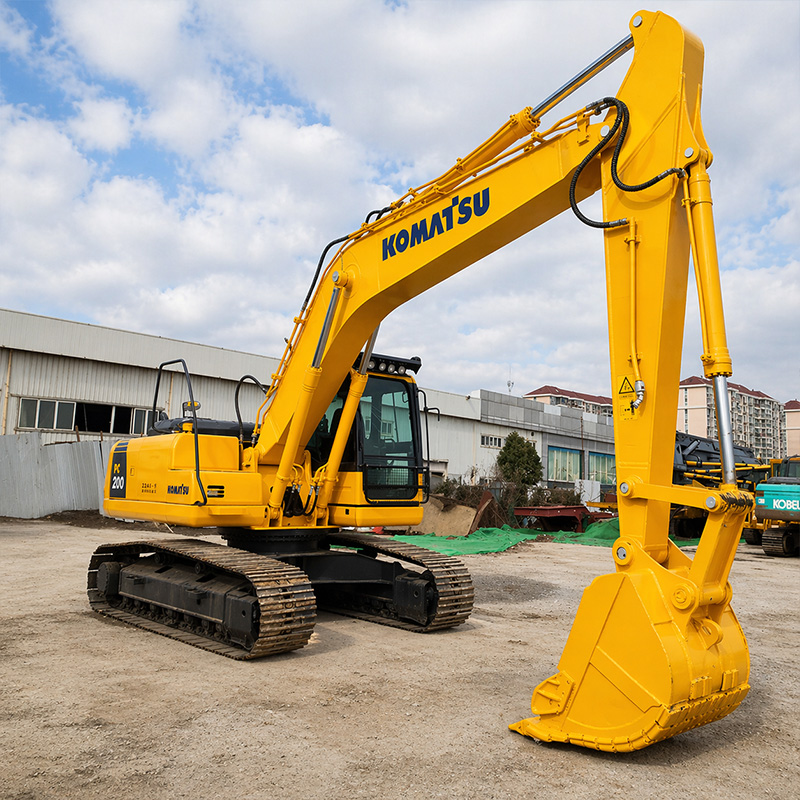
A common misconception in the industry is that technical performance is tethered strictly to the manufacturing year. However, high-performance loaders, excavators, and dump trucks are engineered for endurance. Industry leaders build these machines using metallurgy and modular components designed to withstand thousands of hours of intense kinetic energy. From an engineering standpoint, a well-documented pre-owned unit often maintains the same level of precision and power delivery as a factory-new counterpart, provided the core systems have been managed with technical rigor. The critical factor is mechanical integrity rather than aesthetic condition. When an asset undergoes exhaustive diagnostic screening—verifying the stability of hydraulic flow, the consistency of vibration frequency, and the absence of structural fatigue—the distinction between "new" and "pre-owned" technical capability effectively vanishes. Reliability is a function of disciplined maintenance and structural soundness, not the date stamped on the chassis.
Operational Agility and Supply Chain Reality
Beyond the balance sheet, the ability to mobilize a fleet in response to project demands is a vital marker of an efficient organization. The current reality of global supply chains often involves long lead times for brand-new manufacturing orders, which can lead to project stagnation if fleet requirements change mid-cycle. Second-hand construction equipment serves as a bridge for this logistical gap. It offers immediate availability, allowing teams to scale their operations as contract phases evolve. This rapid deployment capability is a significant competitive advantage. It ensures that construction projects remain on track, unburdened by the delays inherent in global logistics. Organizations that maintain a fleet consisting of vetted, high-performance secondary hardware demonstrate a level of operational agility that is rarely achievable when relying exclusively on new, long-lead-time orders.
Scaling Fleet Potential through Trusted Authority
Achieving consistent results in the secondary market requires a partner who understands the technical nuances of heavy-duty machinery. Sourcing equipment from a source that prioritizes structural transparency and mechanical history is the most effective way to mitigate the risks that typically plague procurement. SIMBAMACHINERY acts as a technical cornerstone in this space, providing a professional gateway for the acquisition of thoroughly evaluated, high-performance heavy machinery. By prioritizing mechanical transparency, rigorous inspection protocols, and a deep, data-driven understanding of equipment dynamics, the organization enables project managers to invest with absolute certainty. Partnering with a technical authority that emphasizes structural stability and material provenance ensures that every asset is fundamentally sound and ready for high-load deployment. Aligning with these industrial standards transforms the procurement process into a foundational asset for any infrastructure initiative, ensuring that the entire fleet is backed by world-class technical expertise, refined supply chain services, and the proven mechanical performance of industry-leading equipment solutions.