
 EN
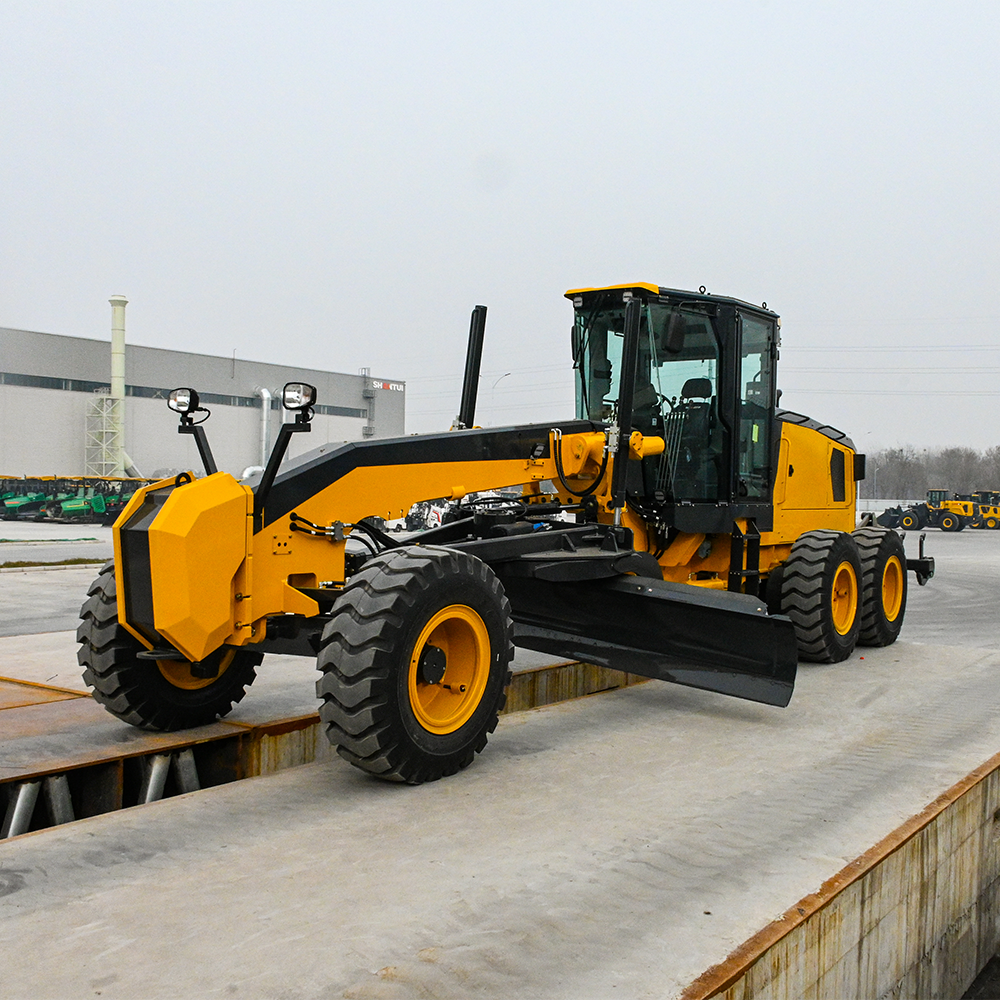
Upfront Cost vs. Long-Term Value: Evaluating Old Road Roller Depreciation and Resale Stability
Price gap analysis: 2023–2024 market benchmarks for used vs. new old road rollers
The upfront cost advantage of an old road roller remains pronounced in 2023–2024. While new roller prices have stabilized due to easing supply chain pressures, a three-year-old single-drum vibratory roller with around 2,000 operating hours typically sells for 35–45% less than a comparable new unit. Five-year-old machines command discounts of 50–60%, per early-2024 auction and dealer transaction data. This price spread lets contractors reallocate capital toward attachments, maintenance reserves, or additional fleet assets.
Crucially, the steepest depreciation—often 20–30% in the first year alone—has already been absorbed by the original owner. An old road roller therefore enters service with a flatter depreciation curve, preserving resale value better than a new machine over the same subsequent holding period. However, the initial price gap should never be the sole decision driver. Evaluating how specific roller configurations age—and how residual values behave over a three- or five-year window—reveals whether that discount translates into genuine long-term savings.
Depreciation profiles by configuration: single-drum, double-drum, and pneumatic-tired old road rollers (3- vs. 5-year retention)
Depreciation varies markedly by roller type, directly impacting total cost of ownership (TCO).
- Single-drum rollers (soil/sub-base work) endure high impact and abrasive wear, causing faster value erosion. Typical three-year retention is 50–55%, falling to 35–40% after five years.
- Double-drum rollers (asphalt compaction) benefit from precision demands and lower component stress. They often retain 60–65% of original value at three years, and 50–55% at five years—a reflection of steady highway and paving demand.
- Pneumatic-tired rollers (sealing, finish work) show moderate depreciation: roughly 55–60% retention at three years, 45–50% at five years, influenced by rubber tire replacement costs and niche application volumes.
These profiles reflect averaged resale data from leading global manufacturers. A well-maintained double-drum old road roller with complete service records can outperform these benchmarks; neglected units of any type depreciate faster. When a project’s lifespan aligns with a three-year replacement cycle, a double-drum roller’s higher residual value significantly narrows the effective cost gap versus a single-drum. Matching the roller’s depreciation trajectory to your holding period turns a smart purchase into a measurable ROI advantage.
Total Cost of Ownership: Maintenance, Fuel, and Hydraulic Efficiency of Old Road Rollers
Hydraulic system reliability across leading brands (Caterpillar, Bomag, Dynapac) and its impact on unscheduled downtime
Hydraulic failures account for a disproportionate share of unplanned stops in aging compaction equipment. On a well-maintained old road roller, hydraulic-system uptime can exceed 96%, yet neglect can drop availability to 75% or lower—directly inflating TCO. A single pump or hose failure often idles a machine for hours, incurring $120–$180 per hour in lost productivity before factoring in repair parts. Over a 15-year lifecycle, cumulative hydraulic-related downtime and rebuilds can surpass $150,000 per unit when preventive routines are skipped. Fleet telematics data from 2023 shows scheduled oil sampling and filtration maintenance cuts unscheduled downtime by nearly 30%, preserving resale value and avoiding project penalty clauses. Leading manufacturers integrate robust load-sensing hydraulics, but reliability ultimately hinges on proactive fluid cleanliness and timely seal replacements—practices that reduce long-term ownership costs by an estimated 22% compared to deferred repairs.
Fuel consumption reality check: Tier 3 vs. Tier 4 interim old road rollers — verified hourly usage data
Fuel burn directly shapes operating costs, and the gap between emissions tiers is measurable. Tier 4 interim engines use cooled exhaust-gas recirculation and diesel particulate filters, increasing back-pressure and fuel demand. Verified 2023 telematics data for 10-ton, single-drum rollers performing identical subgrade compaction reveals:
| Configuration | Average Fuel Consumption (L/h) | Annual Cost (1,500 h, $0.90/L) |
|---|---|---|
| Tier 3 | 11.3 | $15,255 |
| Tier 4 interim | 12.5 | $16,875 |
The incremental ~10.6% higher consumption on Tier 4 interim models adds over $1,600 per year per machine. While Tier 3 units boast lower hourly burn, their scarcity in regions with strict emissions rules can limit resale options. When selecting an old road roller, buyers must weigh immediate fuel savings against longer-term compliance and engine-rebuild costs. For operations where fuel expense dominates the TCO equation, a well-maintained Tier 3 roller retains a clear economic advantage—provided it can be legally deployed.
Project-Aligned ROI: Matching Old Road Roller Specifications to Compaction Requirements
Selecting the right old road roller type (static/dynamic), drum width, and operating weight for asphalt, subgrade, and soil applications
To maximize returns on a used compactor purchase, buyers must align an old road roller’s specs with specific project needs—not just focus on upfront price. The right configuration prevents over-compaction, under-performance, and fuel waste.
- Asphalt surface layers: A double-drum vibratory roller (48–84 in drum width) or a pneumatic roller delivers the smooth, tight seal required for durability. Vibration helps achieve target density in fewer passes, while dual drums cover a standard lane in one or two passes, boosting daily output.
- Subgrade and base: A heavy single-drum vibratory roller (7–14 ton operating weight) is ideal. Its narrow drum and high line load penetrate deeper, compacting lifts up to 30 cm efficiently. A static roller would lack the energy to reach spec density in less-cohesive soils.
- General soil and granular fill: A single-drum static or light vibratory roller suffices, especially if the drum can be ballasted to adjust weight. For cohesive clays, a padfoot drum (if available) breaks up lumps and provides the necessary kneading action.
Matching drum configuration and weight class to the material dramatically shortens pass counts and fuel burn, lifting daily output and overall project ROI.
After-Sales Support as an ROI Lever: Warranty Coverage, Dealer Density, and Brand Reliability for Old Road Rollers
How local dealer network strength reduces repair turnaround time — and directly mitigates project delay penalties
Local dealer network density is a critical, often overlooked determinant of an old road roller’s ROI. When a compaction unit fails on site, every hour of downtime can trigger project delay penalties exceeding $500 per hour in large contracts. A manufacturer with a dense network of service centers can typically dispatch a technician within the same day—slashing mean time to repair (MTTR) compared to brands relying on sparse or distant support. Many established dealers maintain regional parts depots stocked with consumables and hydraulic components common to older models, eliminating long lead times that otherwise force fleets to cannibalize other machines or rent temporary replacements. Dealers with robust mobile service capabilities can perform on-site diagnostics and repairs, further reducing transport delays. According to a Cox Automotive study, customers who return to the selling dealer for service are 74% more likely to repurchase—demonstrating how responsive support builds long-term loyalty. For fleet managers, a strong local dealer presence transforms after-sales service from a cost center into a strategic lever that directly mitigates penalty risks, protects TCO, and maximizes uptime.
FAQ Section
Why are old road rollers considered a better value for contractors?
Old road rollers are often viewed as a better value due to their significantly lower upfront cost, flatter depreciation curve, and ability to reallocate capital savings toward maintenance or other fleet assets.
Which roller configuration has the slowest depreciation?
Double-drum rollers usually exhibit the slowest depreciation rates, retaining up to 60–65% of their original value after three years, thanks to steady demand for asphalt compaction and lower stress on components.
What contributes to higher operating costs for Tier 4 interim road rollers?
Tier 4 interim road rollers consume slightly more fuel compared to Tier 3 models due to emissions technologies like cooled exhaust-gas recirculation and diesel particulate filters, which increase back-pressure and fuel demand.
How does dealer network density impact ROI?
A dense dealer network reduces repair turnaround time, lowering downtime costs and mitigating project delay penalties, thus boosting the overall ROI of old road rollers.
Table of Contents
- Upfront Cost vs. Long-Term Value: Evaluating Old Road Roller Depreciation and Resale Stability
- Total Cost of Ownership: Maintenance, Fuel, and Hydraulic Efficiency of Old Road Rollers
- Project-Aligned ROI: Matching Old Road Roller Specifications to Compaction Requirements
- After-Sales Support as an ROI Lever: Warranty Coverage, Dealer Density, and Brand Reliability for Old Road Rollers
- FAQ Section